HubSpot · 2021–2024 · Mobile Platform
Mobile Reporting
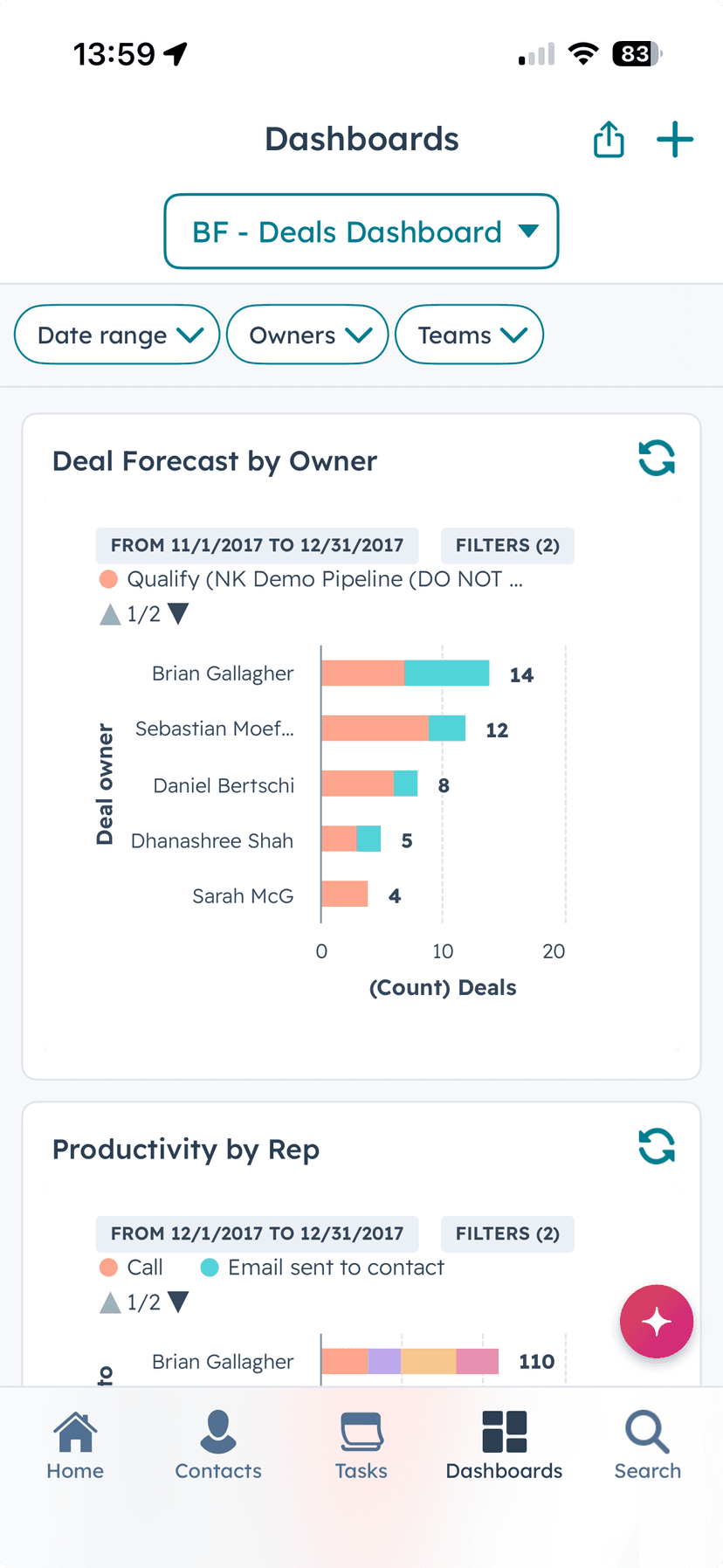
Built mobile dashboard reporting from scratch, targeting the sales leader persona as the entry point for deeper platform adoption.
HubSpot has always had a mobile app, but reporting — dashboards, performance metrics, team activity — was web-only. A sales manager checking how their team was tracking had to open a laptop.
Why it didn't exist yet
Two blockers. The mobile tech stack wasn't ready — building reporting on native iOS and Android would have meant duplicating significant business logic with no long-term benefit. And the web reporting team was in the middle of a platform migration. Building on the old system would have meant rebuilding everything once they were done.
The right moment was when that migration finished. I had to argue for the investment — mobile reporting wasn't an obvious priority when the web experience already existed.
The strategic bet
The target persona was sales managers and leaders — not reps. Leaders drive adoption: when a manager uses HubSpot on mobile to check team performance, they pull their reps in. Reporting was the feature that mattered to leaders, and building it on mobile was a play for deeper platform adoption from the top down.
What was built
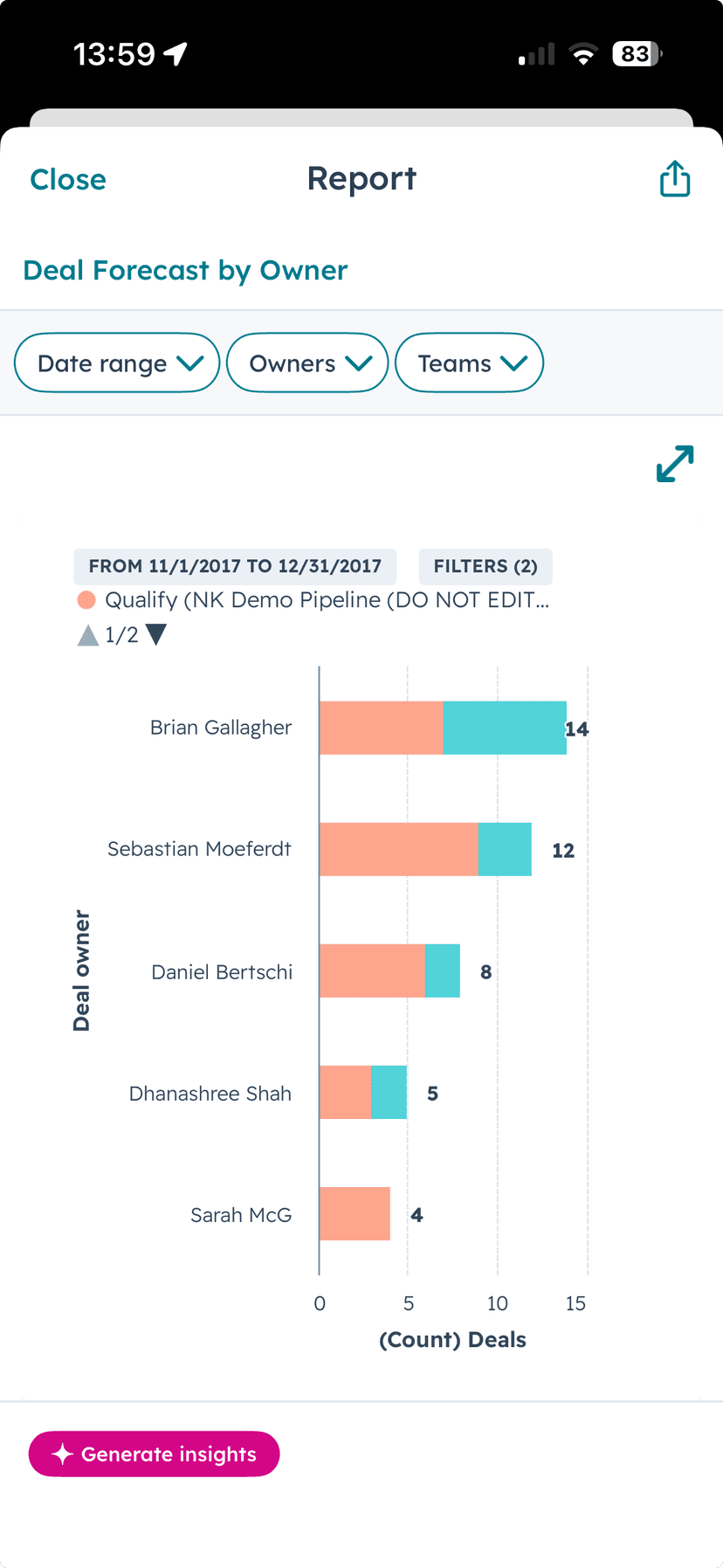
Mobile dashboard reporting with full parity to the web experience, built on the migrated reporting infrastructure. Leaders could view their team's dashboards, check pipeline metrics, and monitor activity from their phone.
Alongside this, I led the React Native migration that changed how the mobile team shipped. Quotes — a complex transactional feature — launched simultaneously on iOS and Android in roughly two months. The prior estimate for that kind of feature, building natively for each platform separately, was six months. Shared components and business logic made the difference.
Results
55K
weekly users
27→43%
retention
3→10%
cross-platform
+7–9pts
CSAT
Mobile dashboard WAUs grew to 55,000 — about 1 in 5 mobile users. Weekly retention improved from 27% to 43%. Cross-platform usage (web users who also used mobile weekly) went from 3% to 10%. CSAT improved 7–9 points from the 2023 baseline.